



By Curt Radkin, sustainability strategy and planning director at Wells Fargo, Corporate Properties Group
October 15, 2025
6-minute read
Creating a more sustainable work environment requires both long-term vision and consistent day-to-day execution. At Wells Fargo, that means designing and constructing more efficient buildings, tapping into cleaner energy sources, and creating opportunities to enhance operational and community resilience.
This work is part of a more than decade-long journey, which includes large-scale infrastructure projects, like new campuses with expansive solar energy systems, and building-level upgrades, like electric vehicle (EV) charging for employees and efficient LED lights to replace traditional fluorescent lighting.
In 2012, Wells Fargo set its first operational sustainability goals to reduce energy and water use, waste, and greenhouse gas (GHG) emissions by 2020. After exceeding those goals, the company set expanded, more ambitious operational goals for 2030.
These objectives include reducing GHG emissions (Scopes 1 and 2) from 2019 levels by 70%, energy use and waste by 50%, and water use by 45%, and meeting 100% of annual purchased electricity consumption needs with new renewable sources. This approach supports an ambitious 2050 goal to be net zero in Wells Fargo’s own operational emissions.
As of December 2024, through strategic planning and action by Wells Fargo’s Corporate Properties Group, the company has achieved the following progress from its 2019 baseline:
Making progress toward these goals requires coordination and innovation across teams, along with tackling equipment supply chain challenges, navigating rising construction costs, and complying with building regulations.
This August, Wells Fargo opened a new, state-of-the-art campus in the Dallas area, reflecting a strategic investment in sustainable operations. It is designed to be the bank’s first Net Positive Energy campus, which will use rooftop solar panels to create more energy than the campus consumes annually. The campus also includes EV charging stations, dynamic glass that automatically tints in direct sunlight, a water collection system, smart irrigation, and native plantings to minimize watering requirements.
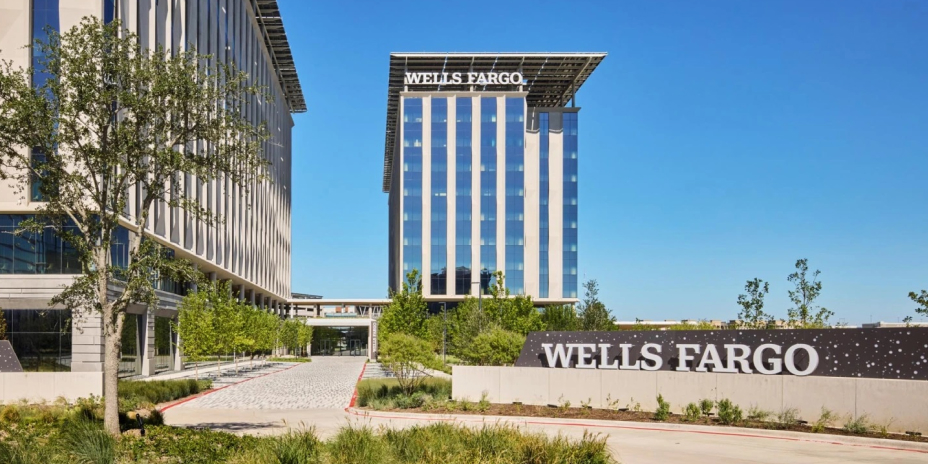
The Dallas campus is part of a broader effort to integrate sustainability across Wells Fargo’s footprint. The company has on-site solar at more than 75 locations, including rooftop installations on branches in Arizona, California, Colorado, and New Jersey.
At corporate facilities, the company is deploying renewable energy generation and battery energy storage to increase resilience and maximize the benefits of solar power.
In addition to on-site projects, Wells Fargo is also expanding agreements with utilities and renewable energy suppliers for offsite, utility-scale renewable energy. The bank’s largest renewable energy transaction to date has been executed with a solar project located about an hour south of the new campus near Dallas. That facility is expected to produce over 340k MWh worth of renewable energy certificates annually for Wells Fargo over the next 15 years, while also supporting regional operations by improving grid resiliency.
Wells Fargo’s international campuses are also setting high standards. The company’s 1.2 million-square-foot Tower 4 building in Hyderabad, India is the largest project in the world to achieve LEED Platinum v4.1 certification. Buildings in Bangalore and the Philippines are also LEED certified for energy, water, and waste.
The company’s sophistication and expertise in these areas allows the bank to work alongside business clients who engage in sustainable financing. The corporate properties and planning teams can join client conversations to share experiences and insights to support workplaces that are efficient, resilient, and built for the future.